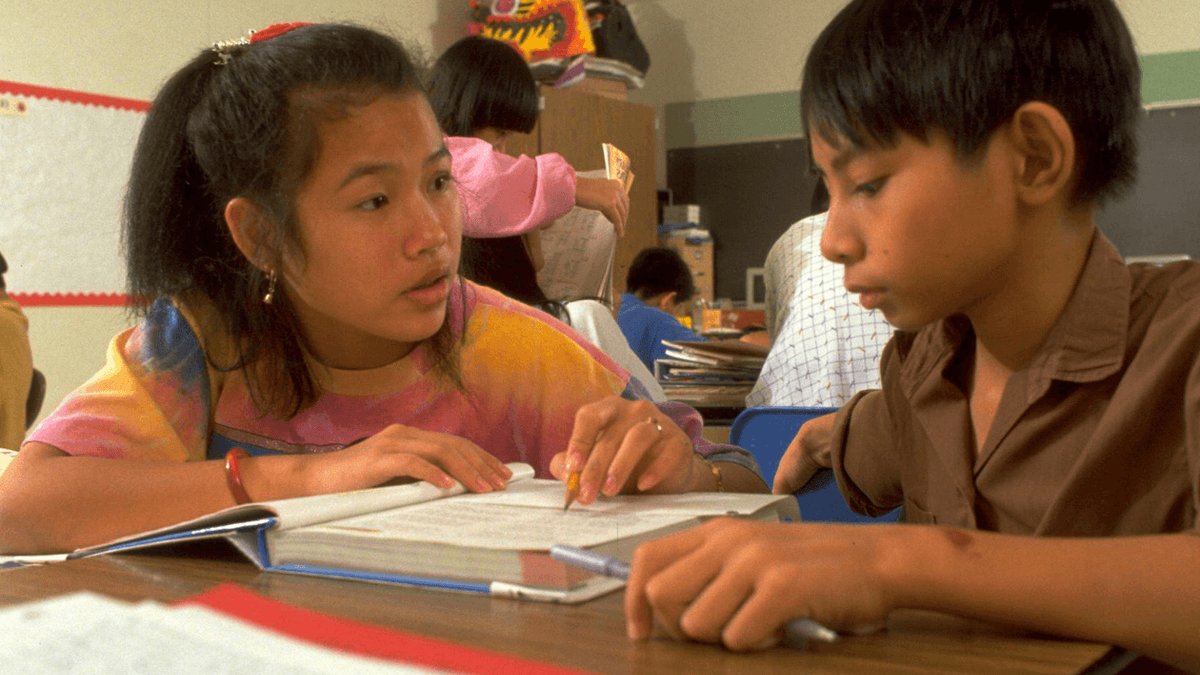
Harvard College students Sophie Nguyen and Minh Nguyen in 2023 embodied the traits of many first-year undergraduates: relentless work ethic, a drive for achievement, and frequent exhaustion. Yet they stood apart in one critical way. As second-generation Vietnamese Americans, they belonged to a demographic where higher education had become the cornerstone of success in the United States. Within a single generation, Vietnamese immigrants—many of whom arrived as refugees carrying trauma and minimal resources—had achieved one of the most dramatic educational ascents among immigrant groups in the country.
This transformation did not occur by chance. It resulted from a focused commitment to public education, a cultural reverence for academic accomplishment, and a collective willingness to make sacrifices for future generations.
From Refugees to Students
The first significant wave of Vietnamese immigrants reached the U.S. following Saigon’s fall in 1975, with approximately 125,000 refugees resettling. By the early 2000s, that population had swollen to over 1.6 million, establishing Vietnamese Americans as one of the fastest-growing immigrant groups in the nation. Early arrivals confronted formidable obstacles: language barriers, unfamiliarity with American systems, and economic hardship. Many settled in working-class districts and enrolled their children in public schools.
For the first generation, education was not merely a priority but a survival strategy. Migration Policy Institute data shows that only about 29% of first-generation Vietnamese immigrant adults held bachelor’s degrees or higher, while a substantial portion lacked even high school diplomas—a direct consequence of wartime disruptions and resettlement challenges.
Sophie Nguyen’s parents illustrate this generation’s struggles. They arrived with no English proficiency and juggled part-time employment while attending community college, but family obligations forced them to withdraw. Their sacrifices became the motivating force for their children.
How the Second Generation Changed Everything
Pew Research data reveals a stark contrast for the second generation. Among U.S.-born Vietnamese Americans aged 25 and older, just 19% have a high school education or less, down from 51% for foreign-born Vietnamese. Over half have attended college, and 55% hold at least a bachelor’s degree.
This shift extended beyond statistics into cultural norms. Vietnamese American families treated education as the primary pathway to economic stability. Unlike other Southeast Asian groups, Vietnamese Americans distinguished themselves with exceptionally high college enrollment and professional employment rates. For many, higher education was not an optional aspiration but an assumed obligation.
Minh Nguyen recalls the early pressure. His parents, despite their own limited schooling, pushed him toward academic excellence.
This drive was not isolated but reflected a broader community effort. Vietnamese enclaves supported social networks that reinforced academic performance. Religious institutions, neighborhood associations, and cultural organizations created support systems and held students accountable. High achievers received public recognition, while struggling students faced social consequences. The result was a self-sustaining cycle of raised expectations and outcomes.
Research by sociologists Van C. Tran, Jennifer Lee, and Tiffany J. Huang confirms this pattern. Second-generation Vietnamese Americans are more than twice as likely to earn college degrees as their parents, 62.4% compared to 26%. This gap ranks among the largest observed across major Asian immigrant groups.
Community Networks and Informal Support Systems in Vietnamese American Education
Vietnamese American students rely on tightly woven community networks that extend beyond family units to include religious groups, local businesses, and neighborhood organizations. These networks act as informal support systems, offering resources such as tutoring, mentorship, and shared information about educational opportunities. Unlike many immigrant groups, Vietnamese Americans often access these services through public channels rather than private institutions, reinforcing their dependence on community-driven solutions.
Research indicates these networks reduce socioeconomic disadvantages by providing guidance on school selection, academic programs, and college admissions, areas where immigrant parents may lack familiarity. By pooling knowledge and assets, Vietnamese American families create what scholars call “ethnic capital,” which helps students handle public schools effectively. This approach has allowed the second generation to surpass earlier educational gaps, even without relying on elite private education pathways.
Public Schools as the Foundation
The key to this mobility was public education. Unlike other immigrant communities that relied on private tutoring or ethnic schools, about nine out of ten Vietnamese American students attended public institutions. These schools served as the primary setting for language acquisition, academic preparation, and social integration.
For families with limited resources, public schools represented the most practical choice. Sophie’s family selected them primarily for affordability. Minh’s parents relocated to Texas for agricultural work, not for school quality; but the public system still provided the necessary structure.
Washington High School in New Orleans became a prime example of this approach. The school offered language instruction, cultural events, and student clubs, all designed to help refugee students adapt while preparing for higher education. Its success paralleled that of post-World War II Japanese Americans, who, despite internment and discrimination, achieved education outcomes matching native-born whites by the 1960s.
