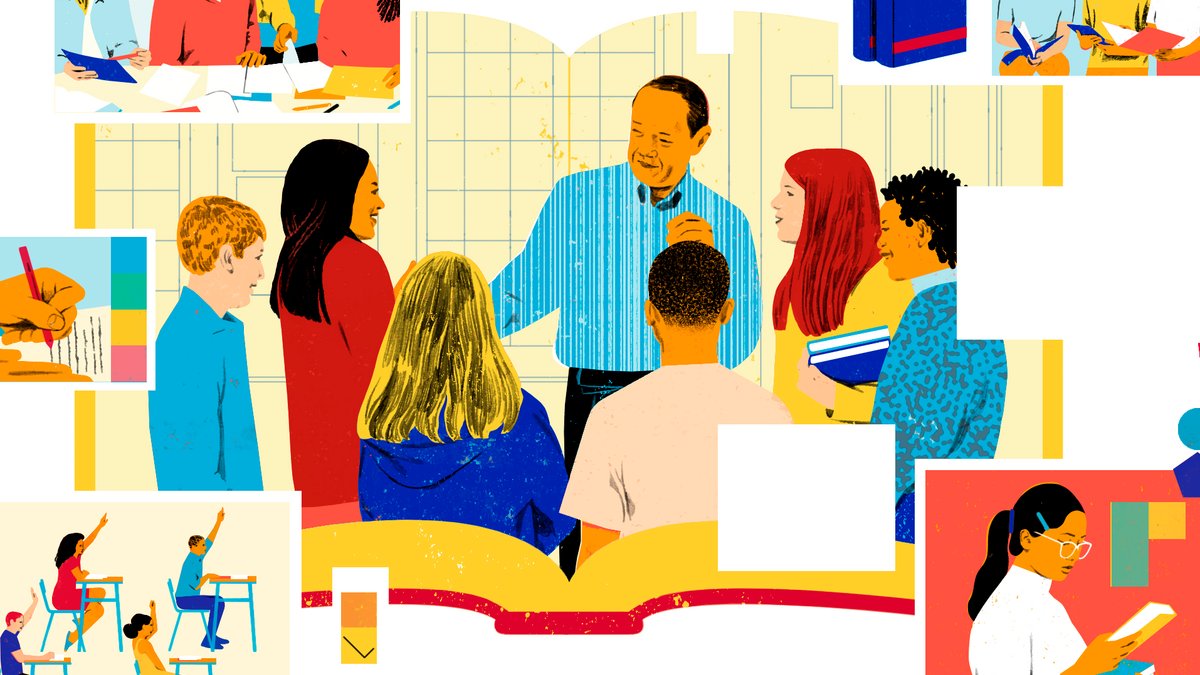
Teacher preparation programs across the United States are tasked with filling a growing gap as seasoned educators retire, yet they face criticism for lagging behind the realities of today’s classrooms.
What Teacher Prep Programs Get Right
Larry Ferlazzo, a former high-school English and social studies teacher of more than two decades, says the pipeline works but notes that most of his colleagues at the time—all wonderful people—hadn’t taught a K-12 class in decades, highlighting a disconnect between theory and practice.
Andrea Terrero Gabbadon, Ph.D., an award-winning educator and consultant, stresses that strong programs “expose future teachers to how schools operate beyond the confines of their own experiences.” She points out that many aspiring teachers assume their own K-12 schooling represents the norm, a notion she calls a “news flash.”
Gabbadon’s courses guide students through federal statutes such as No Child Left Behind and the Every Student Succeeds Act, then drill down to local board decisions and district budgeting. Historical cases, Brown v. Board of Education, Milliken v. Bradley, and Lau v. Nichols, are examined to explain why the teaching workforce still fails to mirror student demographics.
Preservice teachers also encounter a range of pedagogical models, from culturally responsive teaching to queer pedagogy. The goal, according to Gabbadon, is exposure rather than mastery, ensuring candidates recognize multiple pathways to student engagement.
Retention remains a pressing concern: roughly one in six teachers leaves their school or the profession each year, with the attrition rate climbing among newcomers. Programs often consider their role complete once a candidate earns certification, a practice Gabbadon argues should change.
Evidence suggests that early, sustained classroom immersion narrows the gap between expectations and reality. One program she helped design placed student-teachers in supervised classrooms from the first year, a model that demands precise scheduling, reliable transportation, and strong district partnerships.
Related Post: Progressives Upset Conservatives in California School Board Races
The same initiative reported that participants gained a clearer sense of lesson planning, family communication, paperwork, and the emotional load that precedes the first bell.
Beyond graduation, some schools maintain contact with alumni, offering mentorship, professional development, and connections to hiring districts. Such ongoing support appears to boost the likelihood that new teachers remain in the field.
Areas Needing Improvement
Math educators at Bayside High School in New York City argue that community building is essential. They cite the TIME 2000 Secondary Math Education Program at Queens College, CUNY, where students form cohorts identified by graduation year, such as “Carl Huo T-26”, to support camaraderie.
The program requires collaborative coursework, reinforcing teamwork and creating a support network that endures into challenging teaching assignments.
TIME 2000 also teaches a structured observation framework, prompting preservice teachers to focus on specific classroom aspects, like student motivation or peer communication, during each visit.
Ferlazzo, now a volunteer tutor to English-learner newcomers and youth in juvenile detention, highlights how active practitioners can enrich teacher-education programs.
