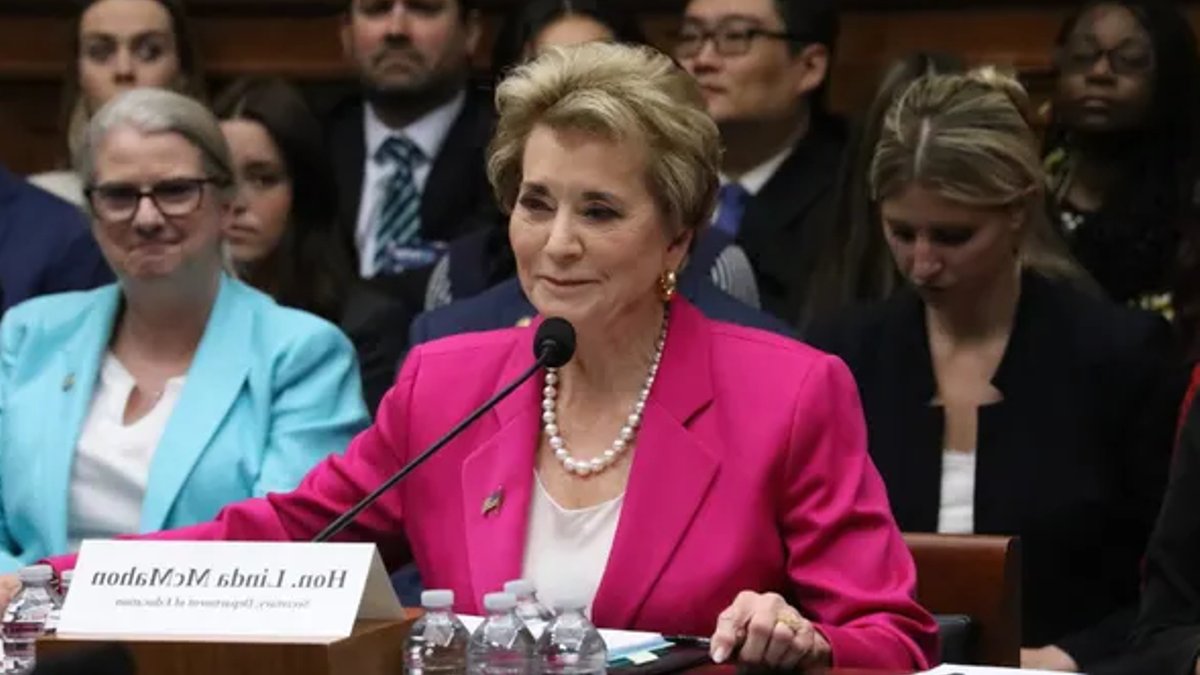
The Education Department proposal would make it easier to end grants, according to a rule published in the Federal Register on Aug. 24.
Proposed rule expands cancellation authority
The draft regulation would let the agency cancel discretionary funding “for convenience,” a phrase experts describe as vague and atypical for multi‑year awards. It also would require recipients to obey executive orders and give the department power to review information from applications and prior activity.
In addition, the rule would allow the agency to issue partial awards, provide money in installments, or delay fund releases. The language explicitly states that the department can retain “ongoing programmatic discretion” after an award is made, consistent with law.
“So this basically means they could terminate it, because they decided after a couple years they didn’t like the policies promoted by [a] grant program,” said Josie Eskow Skinner, founding partner at Sligo Law Group. “So it would just be a termination for essentially any reason.”
Prior to the current administration, the department rarely ended discretionary funding unless recipients failed to meet financial or performance standards. The new approach codifies practices that have already drawn lawsuits.
Related: Utah University Closing Sandy Campus
Legal challenges and potential impact
In 2025 the agency withheld up to $1 billion in mental‑health funding that supported school‑based programs in at least 16 states. Those programs, created after mass shootings, were meant to improve student well‑being.
The Biden administration had factored diversity and cultural competency into award decisions. The subsequent termination letters claimed the awards reflected “the prior Administration’s priorities” and conflicted with the current agenda.
U.S. District Judge Kymberly Evanson said, “Nothing in the existing regulatory scheme comports with the Department’s view that multi‑year awards may be discontinued whenever the political will to do so arises.” The ruling forced the agency to issue new continuation decisions.
Maryland Attorney General Anthony Brown noted the department later announced it would fund recipients only through July, then review grants again. The state joined 14 others in filing suit, arguing that the altered mechanism remains illegal.
Litigants have invoked the Administrative Procedure Act, asserting that the agency ended funding without completing required performance reviews.
Related: Custom Learning Systems Worth the Investment
“If they receive that first year funding, what do we have to do to make sure that we’re eligible to receive that continuation award year two or year three?” asked Kelly Christiansen, legislative director for The Bruman Group. “And this just kind of adds in language that allows the department to have a lot of discretion in terminating those awards.”
For schools relying on such money, the uncertainty can affect staffing, curriculum planning, and community partnerships. When funding disappears mid‑cycle, districts may have to reallocate limited resources or halt services, leaving students without promised support.
The department, when asked for comment, said the changes would prioritize merit, incentivize higher‑quality outcomes for students and families, and better protect taxpayer dollars. The agency estimates the revisions would cut spending by $186,363 annually over the next decade.
Public comments are accepted for 30 days after the Aug. 24 publication. Stakeholders can submit feedback through the Federal Register portal.
