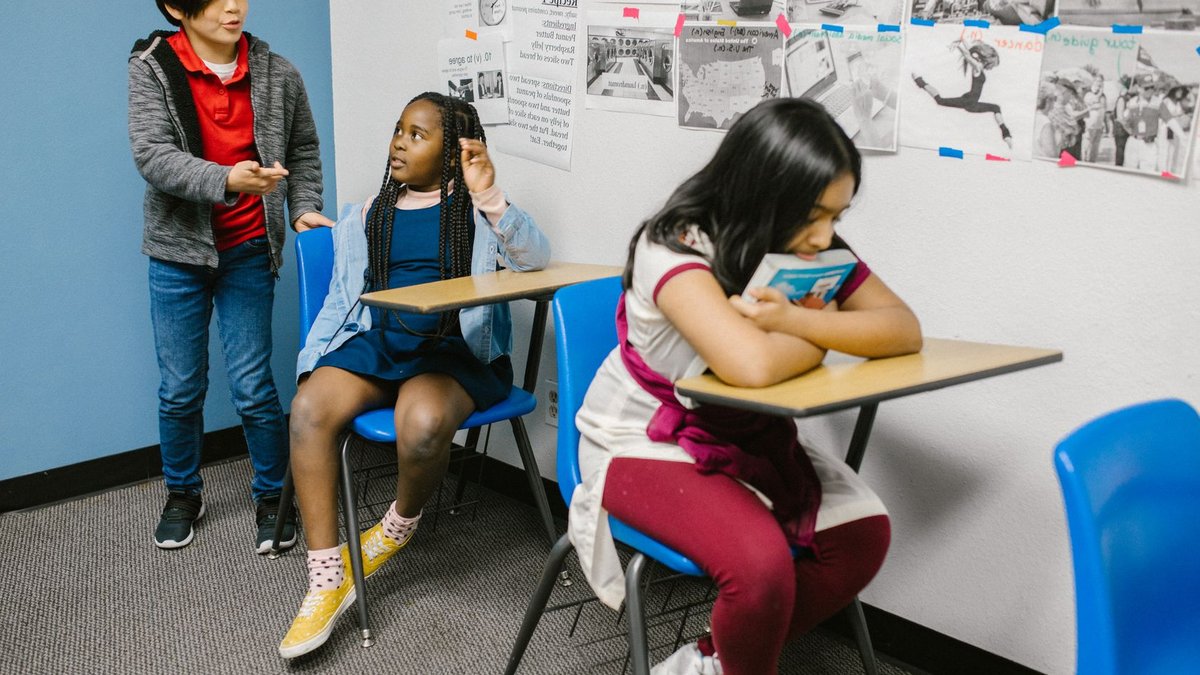
California’s statewide push to end separate classrooms for students with disabilities has left some children like James—whose name has been changed to protect his privacy—struggling in general education settings. The shift, mandated under the state’s inclusion initiative, eliminated structured support systems without ensuring the necessary resources for successful integration. James, a first-grade student with autism, began the school year eager to learn but soon stopped participating, refusing to attend class altogether. His decline followed the closure of Campbell Union School District’s special day class program, a step aligned with California’s broader inclusion efforts aimed at placing students with disabilities in mainstream classrooms.
Before the change, James spent 95% of his time in a specialized classroom staffed by five teachers and serving ten students, all focused on intensive developmental needs. Now, he attends a general education class with 25 peers and one teacher, receiving only occasional help from a visiting specialist.
The transition lacked critical preparation: no pre-visits to the new classroom, no visual tools to help him anticipate changes, and no gradual introduction to the unfamiliar routine. Research and state guidelines clearly state that effective inclusion requires careful planning, coordinated staffing, and structured transitions. Yet in James’s case, none of these were provided. The district treated inclusion as a simple physical placement shift rather than a full systemic overhaul demanding funding and preparation.
A first-grade specialist teacher who worked with James explained that students with disabilities require ongoing monitoring to ensure sweeping changes like inclusion benefit them rather than set them back. James lost a whole year of meaningful education because the state looked the other way. The lack of oversight allowed districts to implement inclusion without addressing the fundamental needs of students like James, leaving gaps in support that undermine the initiative’s goals.
Bill Aims to Fix Inclusion’s Oversight Failures
Assembly Bill 181 presents a potential remedy by strengthening the oversight role of the State Superintendent of Public Instruction and the Commissioner of Education. The proposed law would require districts to follow legal requirements for individualized support, monitor compliance in real time, and hold schools accountable for delivering necessary services. Currently, districts have significant discretion in implementing inclusion, and without independent oversight, critical gaps often go unnoticed. AB 181 could rectify these issues by mandating the systems, staffing, and resources needed to meet federal guarantees for tailored support.
An independent monitor could identify failures early, expose weaknesses in statewide efforts, and prevent students from slipping through the cracks. The bill might require districts to document whether students are actually learning, verify that supports are in place, and enforce compliance with legal obligations. Without these safeguards, inclusion risks becoming a hollow policy, a well-intentioned mandate that fails students when districts lack the tools to execute it properly.
Policy Risks Backfiring Without Real Support
California’s inclusion initiative assumes that moving students into general education classrooms will improve outcomes. However, without oversight, the approach can backfire, as it has for James. His experience highlights a broader issue: districts often implement inclusion without the necessary infrastructure, leaving students without essential support. If AB 181 is enacted and enforced effectively, it could reshape how the California Department of Education operates. A stronger oversight system would ensure inclusion is not just a policy shift but a well-funded, monitored effort prioritizing student needs. For James, this might mean gradual transitions, individualized instruction, and consistent support, elements currently missing from his placement.
