National surveys reveal that just 14% of 13-year-olds report reading for enjoyment daily, while nearly one-third admit they never do. Educators of older students frequently cite a lack of motivation as the primary reason behind students’ diminished interest in reading.
The roots of the issue likely run deeper, as noted by speakers at an Education Week panel on Nov. 4. Jaime Johnson, a 7th grade English/language arts teacher, stated that sometimes the lack of motivation is not the only factor at play.
Johnson was one of two presenters in a conversation about classroom routines that can boost middle grades students’ engagement in reading. These approaches aim to cultivate students’ interest in text and offer extra support with skills like fluency and vocabulary knowledge.
Margaret Troyer, the director of literacy research and development at the SERP Institute, said motivation and reading ability are connected issues. “You have to build the skill and the will to get them there,” she said.
Getting struggling readers to engage with longer text is a challenge, but it is an important goal. A full-length novel or nonfiction book can feel daunting for kids that already don’t love reading.
Reading short passages and longer texts develop different skills, and kids need experience with both, Troyer said. Novels bring a shared emotional experience and a shared intellectual experience, as students follow the same characters together over the course of weeks or months.
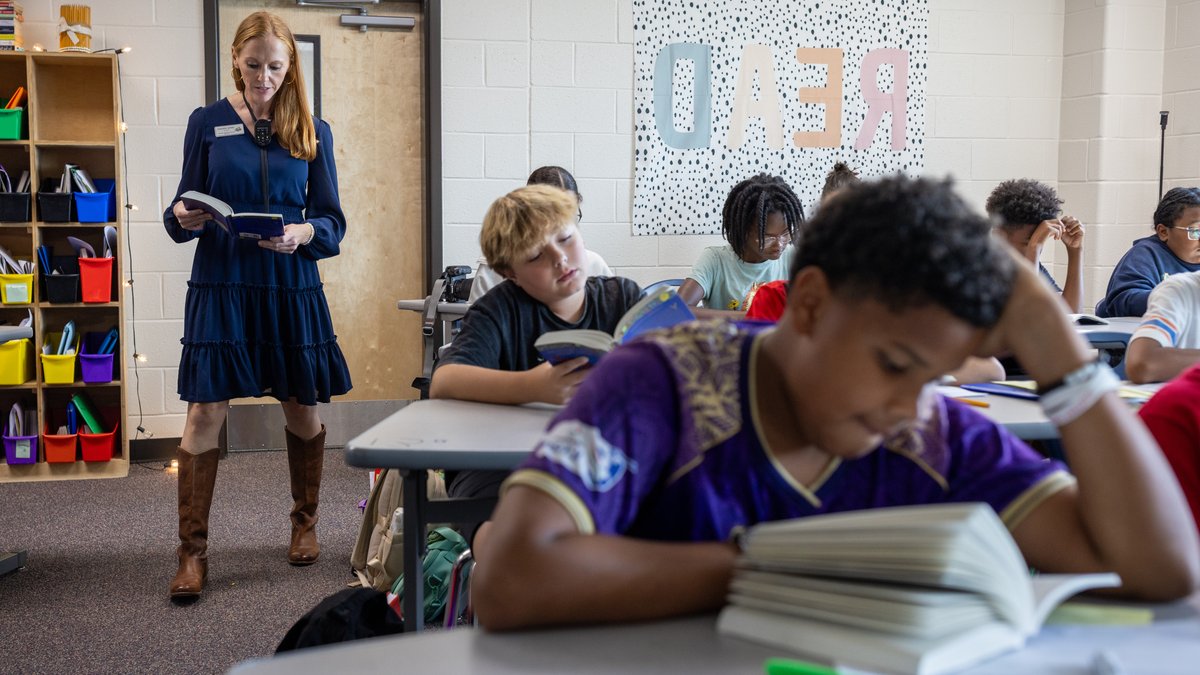
Johnson regularly asks students to read aloud to the whole class during her lessons. She varies the amount and complexity of the text she asks different students to read, depending on their skill level.
Troyer shared some strategies from SERP’s Strategic Adolescent Reading Intervention, or STARI. In this program, teachers break longer texts into chunks that students read independently and then discuss together. Over time, the chunks get longer as students develop their stamina.
Asking students to read in front of the class serves a dual purpose for Johnson. It allows her to monitor their progress through the book and assess their fluency, a skill that many of her middle schoolers are still developing.
In STARI, students often read aloud to partners, giving them practice reading aloud fluently. When Johnson takes a turn reading aloud, she uses it as an opportunity to demonstrate what fluent, expressive reading sounds like—and to model self-correction.
By building students’ stamina, assessing and modeling reading fluency, and engaging them with longer texts, teachers can help students develop a love for reading that will last a lifetime.
They emphasize that developing a love for reading is a long-term process that requires patience, dedication, and a range of teaching strategies. Johnson and Troyer provide valuable insights into how teachers can support students in developing their reading skills and motivation.
