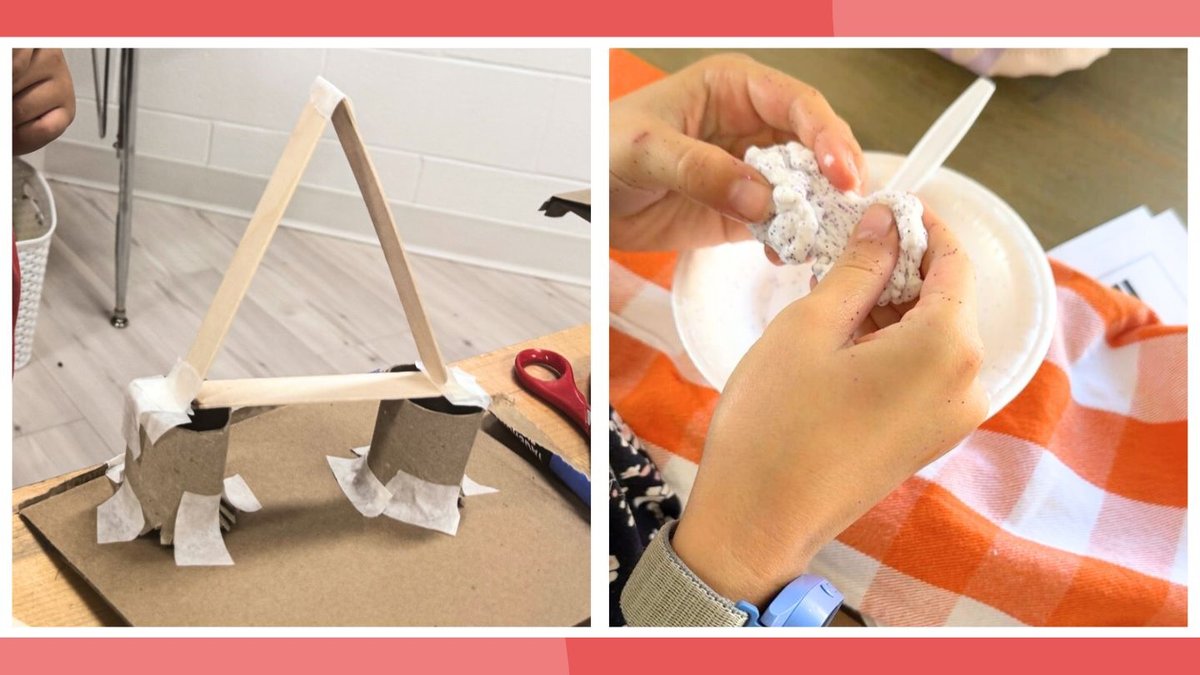
There’s something so fascinating about hands‑on science experiments and projects. They make learning so meaningful and so much fun!
Simple experiments for everyday classrooms
Easy projects need little prep and use items most households already have. One classic activity uses ping‑pong balls and clear cups to model solids, liquids and gases. By arranging the balls tightly, loosely and far apart, students can discuss particle spacing and movement in each state of matter.
Another low‑tech option mixes root beer and ice cream. The fizzy drink, melting ice cream and rising foam let kids label the three states of matter in a single bite. The experiment is quick, tasty and reinforces observation skills.
For a visual demonstration of sublimation, teachers can place dry ice in warm water, cover the surface with a soap film and watch a giant bubble expand until it bursts. Adult supervision is required, and the lesson highlights gas expansion and surface tension.
Density can be explored with hot and cold water colored with food dye. Stacking two containers separated by a card lets students see colder, denser water sink beneath warmer water once the barrier is removed. The set‑up is straightforward and shows how temperature influences liquid density.
Related: Exit Ticket Ideas Provide Teachers Fast Feedback
Medium‑level projects that add a step
When a few extra supplies are available, activities become a bit more involved. The “magic milk” experiment uses milk, food coloring and dish soap on a cotton swab. Touching the soap to the milk creates swirling color patterns, illustrating surface tension and how soap interferes with fat molecules.
Static electricity can be shown by rubbing a balloon or plastic comb on wool or hair and then attracting small paper pieces. The simple charge transfer provides a tactile entry point to discuss electrical forces.
These medium‑difficulty activities often require a little more setup time, but the materials remain inexpensive and the learning outcomes are clear.
When students manipulate real substances, they tend to retain concepts longer than through textbook reading alone. This pattern was noted in past curriculum reforms.
Advanced projects for deeper investigation
The classic baking soda volcano combines baking soda, vinegar, dish soap and food coloring in a model volcano. The foamy eruption, driven by carbon dioxide release, can be scaled by adjusting ingredient ratios, giving insight into reaction rates.
Related: Radiant Romance: Discovering the Allure of Engagement Rings in Longsight
Eggshell strength tests involve placing weight on halved shells to see how much load they can bear before cracking. The experiment links structural engineering concepts to natural designs, showing how dome shapes distribute forces.
Finally, a “leak‑proof bag” demonstration uses a simple plastic bag filled with water and a small hole sealed with tape. When the bag is squeezed, water does not escape, highlighting concepts of surface tension and pressure.
All projects come with printable certificates that can be filled out after completion, giving students a sense of achievement and a record of their scientific inquiries.
Safety first during each activity.
