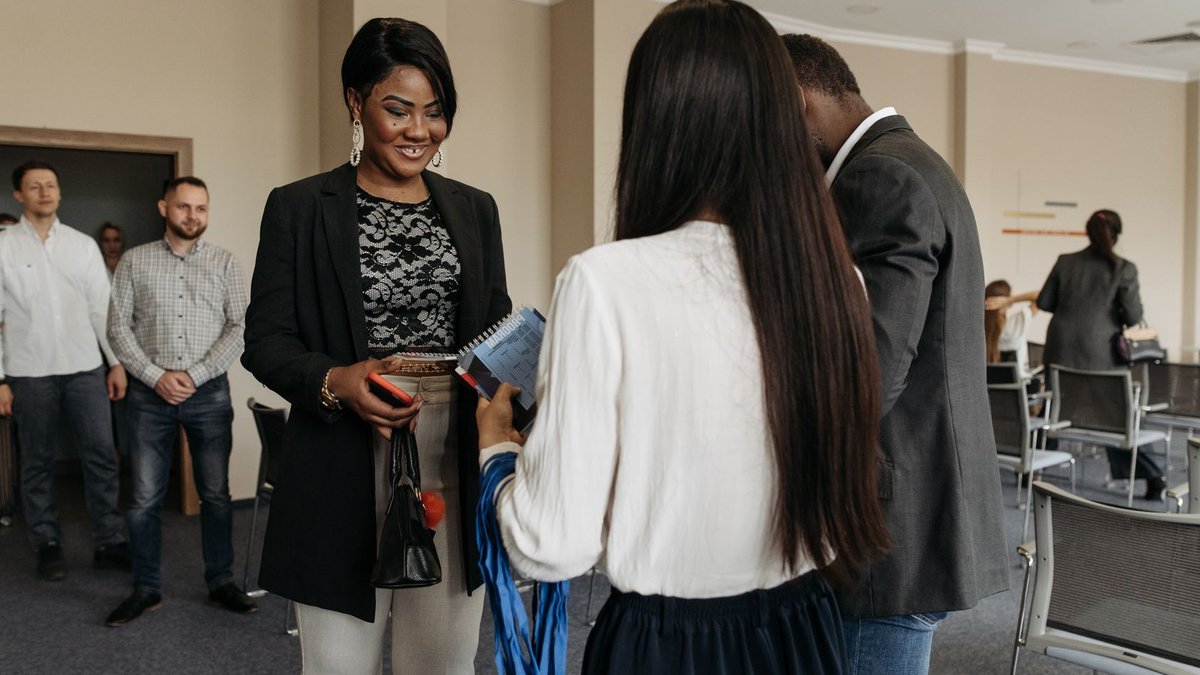
On the final day of a week-long seminar focused on art and literacy, a middle grade art teacher paused before sharing his reflection.
“I came here for me,” he said. “I needed the literacy credit. But I’m leaving, realizing it’s about the we.”
The room fell silent. Heads nodded in recognition. No one rushed to fill the space.
Unexpected Collaboration
The seminar participants spent their final morning developing lesson plans inspired by what they had learned. They worked independently, each creating something they could use in the classroom. Yet they weren’t working in isolation.
At one table sat an 8th-grade ELA teacher, an Academically/Intellectually Gifted (AIG) specialist, an Exceptional Children (EC) teacher, and two art teachers. As they planned, they listened to one another’s thinking, asked questions, and considered possibilities they may not have reached on their own.
No formal protocol required them to collaborate. No one instructed them to create interdisciplinary units. Yet, simply by thinking alongside colleagues with different experiences and expertise, they found their ideas expanded.
Design Beyond Strategy
As a professional learning designer, the experience raised questions about what the work should achieve. Often the worry is whether teachers will leave with ideas they can use on Monday. Did they give them enough strategies? Did they share enough resources?
Read Also: AI Changes Job Market and Education Needs
That morning, the question shifted. Perhaps the most important outcome isn’t the strategy teachers take back to their classrooms, but the realization that they don’t have to do this work alone.
The best professional learning doesn’t expect teachers to choose between practical strategies and meaningful relationships. It offers both. Strategies get us through tough Mondays, but relationships and new perspectives sustain us throughout the year.
Small Shifts, Meaningful Change
Teacher leaders don’t need elaborate initiatives to create these moments. Sometimes, small shifts can make a meaningful difference:
- Mix the tables. Sometimes innovation begins not with a new strategy, but with a different seating chart.
- Give teachers something real to work on. They were designing lessons for students they knew and loved.
- Create thinking partners, not just work partners. Instead of asking, “How can we divide the tasks?” ask, “Who sees this differently than I do?”
The richest conversations during the seminar weren’t built on certainty. They were built on questions. Encouragement of questions such as, “What if…?” “Have you considered…?” and “How might…?”” invites possibility in ways that quick answers often cannot.
In retrospect, the teachers in the seminar didn’t teach how to collaborate. They reminded of the conditions that make collaboration meaningful. As schools move through the school year, perhaps the question isn’t, “What more do teachers need to learn?” Maybe it’s, “Who else needs a seat at the table while they’re learning?”
These interdisciplinary planning sessions revealed how different teaching specializations complement one another. The ELA teacher brought expertise in reading development, the AIG specialist contributed knowledge of advanced cognitive challenges, the EC teacher offered insight into diverse learning needs, and both art teachers provided visual and creative pedagogy experience. When they began designing a unit on community identity, each professional noticed gaps the others had missed. The EC teacher pointed out how visual elements could support students who process information differently. The AIG specialist suggested extending the research component for advanced learners. The art teachers recommended specific techniques for students to represent their ideas. Together, they created a lesson that was more inclusive and challenging than any could have developed alone.
